 0


 British Design, German Steel
 25 Year Guarantee
 Free Delivery over £150*

 Trustpilot

New to Flint & Flame?
25% OFF
your first order
Sign up to The Slice, our free newsletter, for exclusive offers, sharpening tips, chef recipes and more.
Unsubscribe any time. We never share your data.



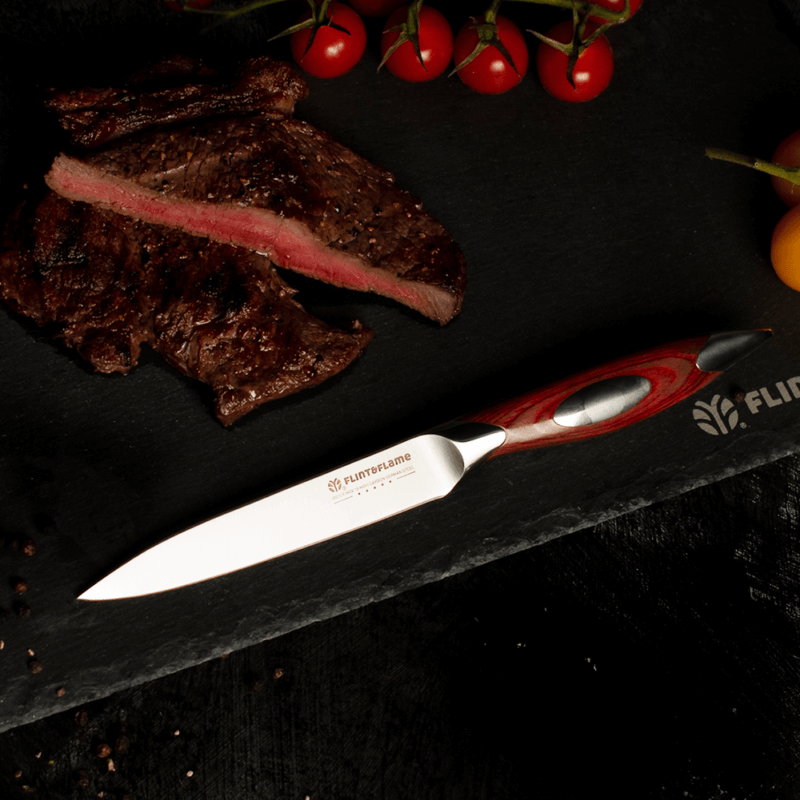
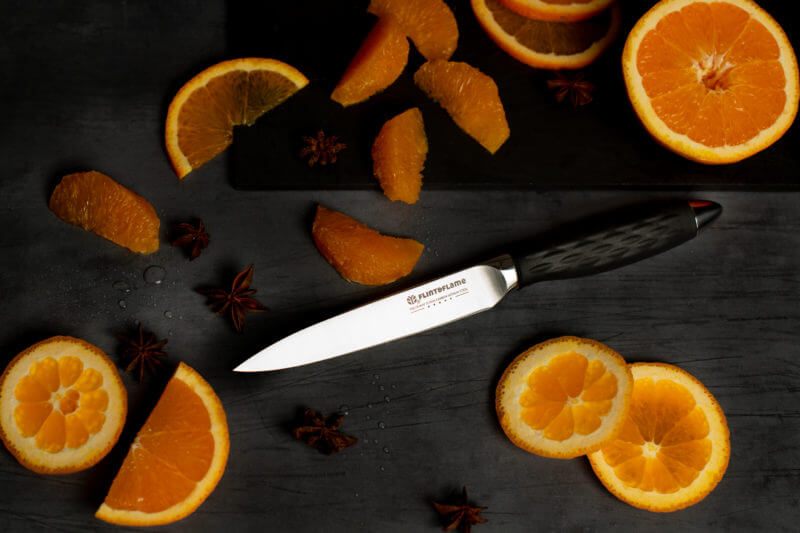
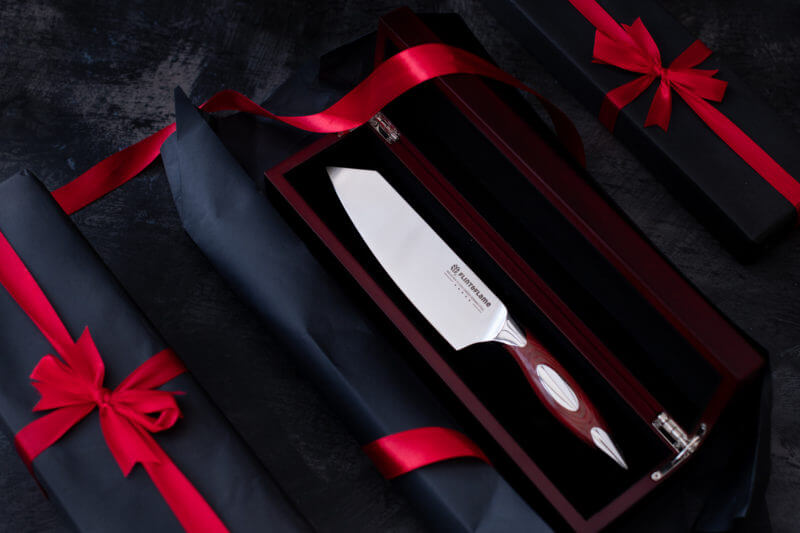
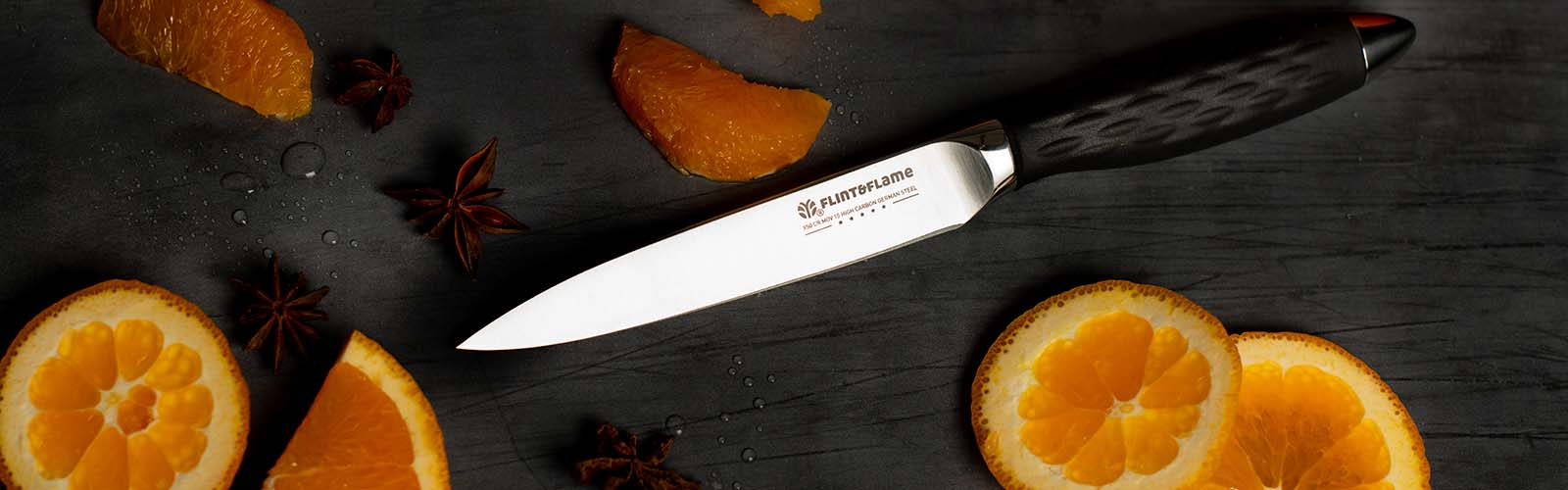
A utility knife sits between a paring knife and a chef’s knife. It is long enough for bigger jobs but light enough for delicate ones, so it earns its place in almost every kitchen.
Reach for it when a chef’s knife is too big and a paring knife is too small.
A utility knife has a narrow blade of around 12–16cm, with either a straight or lightly serrated edge. It is also called a sandwich knife or petty knife.
Length. 12–15cm suits most cooks.
Edge. Plain edges give cleaner cuts on most foods. A fine serrated edge copes better with tomatoes and crusty rolls.
Handle. Look for a comfortable grip.
Check your set. Many knife sets already include one.
Explore more from our full knife range, including Paring Knives, Steak Knives and Chef’s Knives. Keep the edge in top condition with our sharpening tools and our free Kitchen Knife Sharpening Guide.
What is a utility knife used for?
Everyday jobs such as slicing sandwiches, fruit, cheese and small cuts of meat.
What is the difference between a utility knife and a paring knife?
A utility knife is longer and used on a board. A paring knife is shorter and often used in the hand.
Is a utility knife the same as a petty knife?
They are very similar. ‘Petty’ is the Japanese term for a small utility knife.
Do I need one if I have a chef’s knife?
It is not essential, but it is handy for jobs where a chef’s knife feels too big.






+44 (0) 1403 740 230
Brookdale Farm, West Chiltington Lane, Billingshurst, West Sussex RH14 9EA
* Excludes Plancha Cooking System

New to Flint & Flame?
25% OFF
your first order
Sign up to The Slice, our free newsletter, for exclusive offers, sharpening tips, chef recipes and more.
Unsubscribe any time. We never share your data.