0


 British Design, German Steel
 25 Year Guarantee
 Free Delivery over £150*

 Trustpilot
Bread Knives
Bread Knives – Clean Slices Through Every Loaf
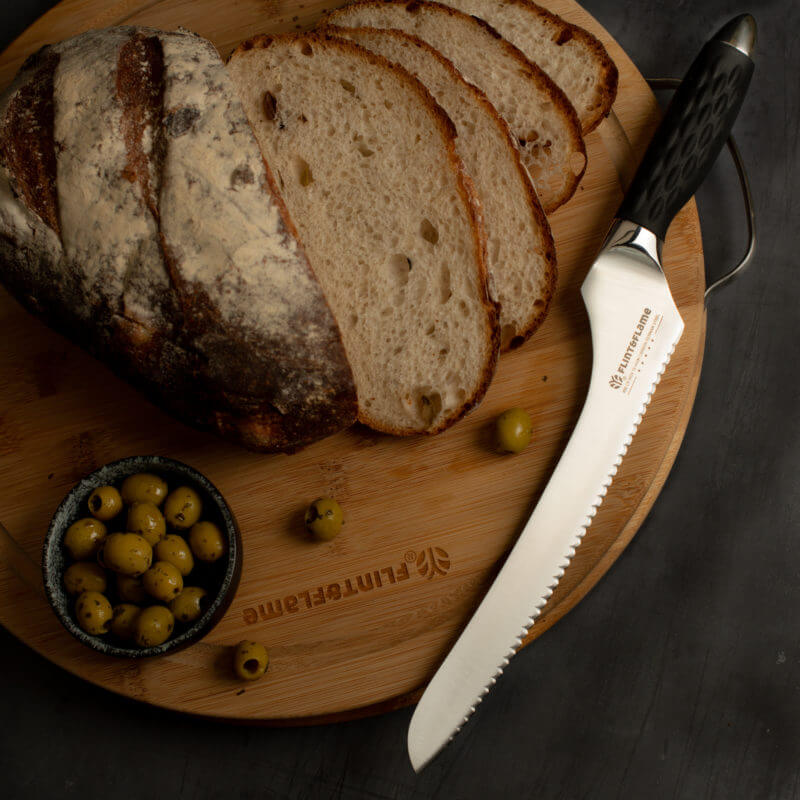
Slicing a good loaf shouldn’t be a battle. A quality bread knife glides through a hard crust and leaves the soft crumb inside untouched, giving you neat, even slices every time, with no squashing, tearing or sawing.
At Flint & Flame, our bread knives are chosen for sharp, durable serrated edges and comfortable handles. Whether you bake your own sourdough or simply want a better way to slice a supermarket loaf, you’ll get clean results.
What is a bread knife?
A bread knife, also called a serrated knife, has a long blade with a toothed edge. The teeth grip and bite into a crust, and the long blade then cuts through the soft centre with a gentle back-and-forth motion. A flat-edged knife has to be pushed down through the loaf, which compresses it. A serrated blade does the work for you.
Why choose a serrated bread knife?
- Clean cuts through any loaf: from crusty baguettes to soft brioche, the teeth stop the blade slipping on tough crusts.
- Less pressure, more control: you guide the knife rather than forcing it, which is safer and keeps slices even.
- Stays sharp for longer: the teeth do the cutting, so a serrated edge holds its performance for years of regular use.
- More versatile than the name suggests: use it on anything firm outside and soft inside, such as tomatoes, pineapples, melons, layered sponge cakes, pastries and cooked joints of meat.
How to choose the right bread knife
Blade length. Longer blades (around 20–25cm) suit large loaves, sourdough boules and big cakes. Shorter blades (15–18cm) are easier to handle and ideal for bagels, rolls, ciabatta and smaller kitchens.
Serration style. Pointed teeth bite quickly into hard crusts, while wavy or scalloped edges are gentler on soft bread and delicate cakes.
Handle comfort. Look for a secure, non-slip grip that feels balanced in your hand. This matters most if you slice bread daily.
Blade material. Stainless steel resists rust and is easy to maintain, making it a practical choice for most kitchens.
How to use a bread knife
- Hold the loaf steady on a stable board.
- Rest the teeth on the crust and use a light, long sawing motion.
- Let the blade do the work. Avoid pressing down.
- For soft bread, slice gently and cut away from your hand.
Caring for your bread knife
- Hand wash with warm soapy water and dry straight away to protect the blade.
- Avoid the dishwasher, which can dull the edge and damage handles.
- Store it safely in a knife storage solution such as a block, magnetic strip or sheath.
- Use a wooden or bamboo board. Glass or stone surfaces wear the teeth. See our cutting and cheese boards.
Complete your collection with our full knife range, including Santoku knives and our knife sets. Keep the edge in top condition with our sharpening tools and our free Kitchen Knife Sharpening Guide.
Bread knife FAQs
Can a bread knife be sharpened?
Yes, but serrated edges need a special tapered sharpening rod or a professional service rather than a standard whetstone. Because the teeth do most of the work, many bread knives go years between sharpenings.
What size bread knife do I need?
A 20–23cm blade suits most households. Choose longer for large loaves and cakes, shorter if you mostly slice rolls and bagels.
Is a bread knife only for bread?
No. It’s excellent for tomatoes, citrus, melons, cakes, pies and cooked meats.
What’s the difference between a bread knife and a carving knife?
A bread knife has a serrated edge for crusts and soft interiors. A carving knife has a smooth, thin blade built to slice cooked meat in neat, even pieces.
View Our Bread Knife Collections
-
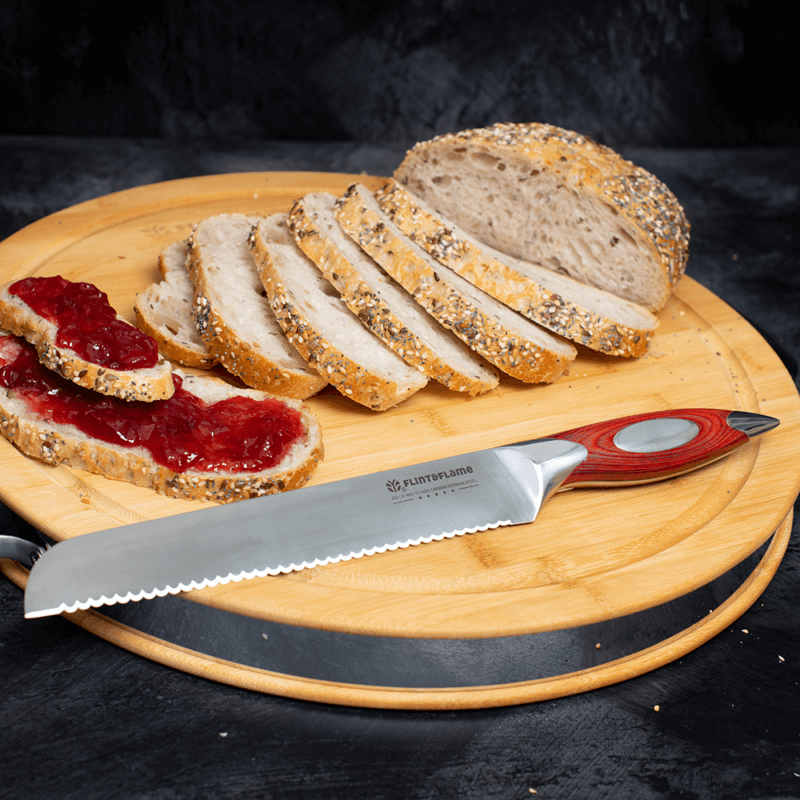
Flint & Flame 8″ Bread Knife
£130.00 -
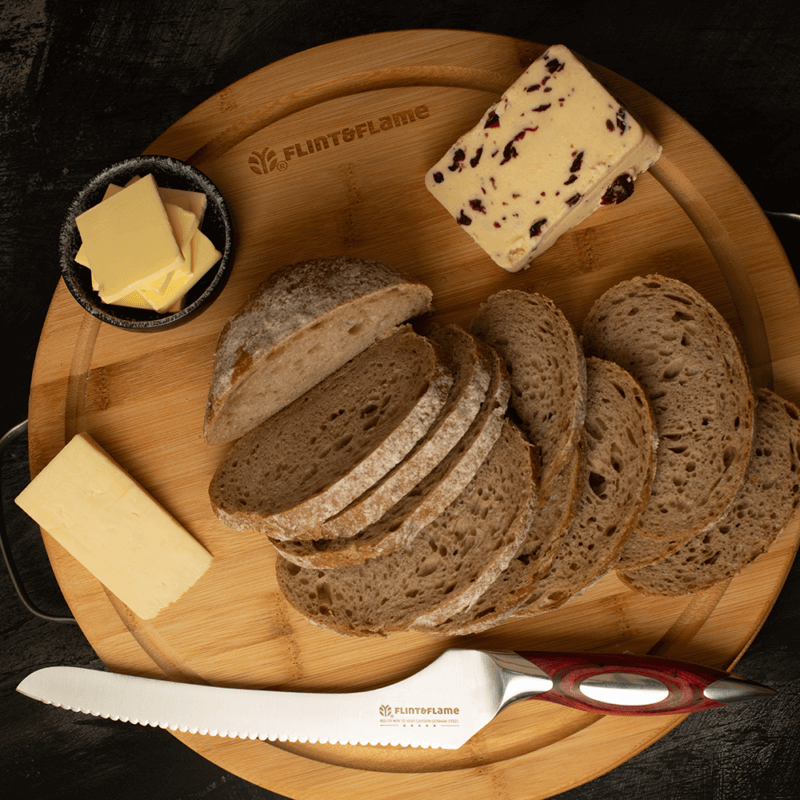
Flint & Flame 9″ Offset Bread Knife
£150.00 -
Pro Series 9″ Offset Bread Knife
£150.00