0


 British Design, German Steel
 25 Year Guarantee
 Free Delivery over £150*

 Trustpilot
Chef’s Knives
Chef’s Knives – The One Knife Every Kitchen Needs
If you could own only one knife, it would be a chef’s knife. It chops, slices, dices and minces, and it handles everything from onions and herbs to joints of meat.
At Flint & Flame our chef’s knives are balanced, razor sharp and built to last, whether you cook every night or only at weekends.
What is a chef’s knife?
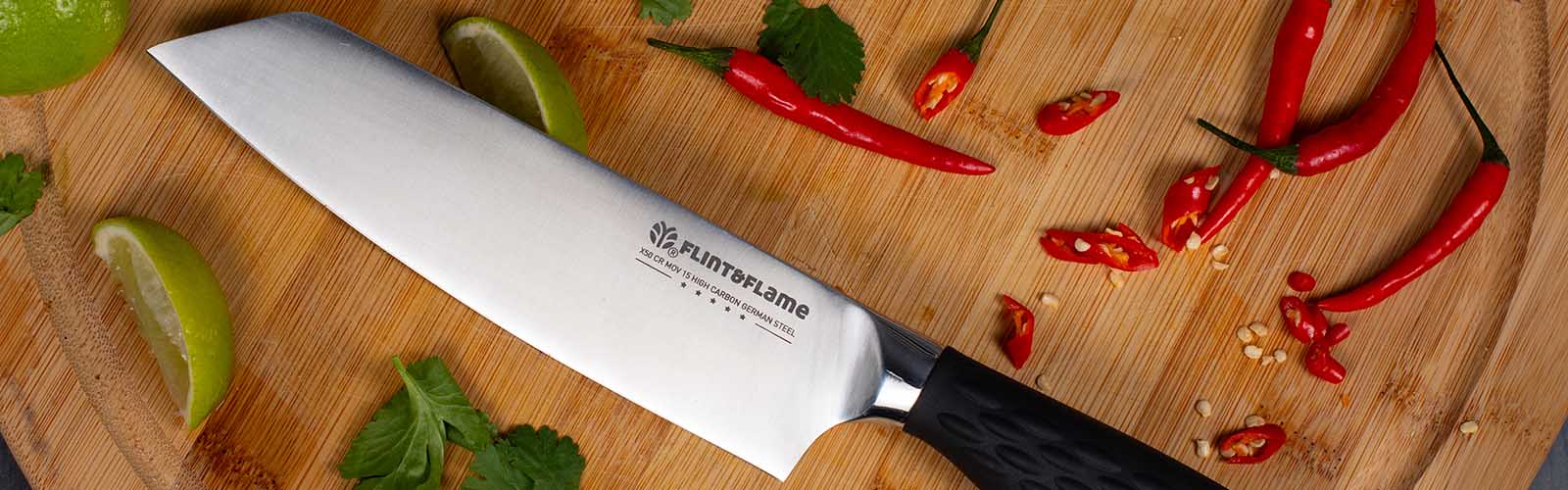
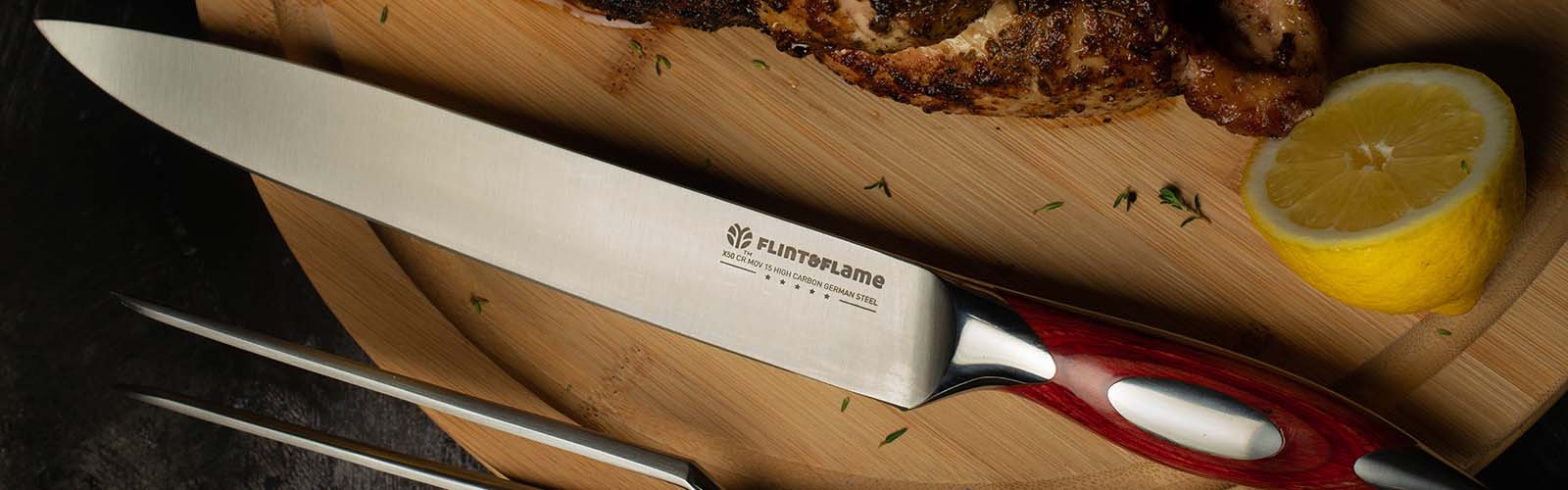
A chef’s knife, also called a cook’s knife, has a broad, tapered blade that curves up to a pointed tip. The curve lets you rock the blade on the board for fast, fine chopping, while the flat heel gives you power for tougher ingredients.
Why choose chef’s knives?
- One knife, hundreds of jobs: vegetables, fruit, herbs, meat and fish are all within its range.
- Faster prep: the long blade covers more food per stroke, which saves time on every meal.
- Control and confidence: a well balanced blade feels like an extension of your hand.
- Lasting value: one good chef’s knife, looked after, outlasts a drawer of cheap ones.
How to choose the right knife
Blade length. 20cm (8 inch) suits most cooks. Choose 15–18cm if you have smaller hands or limited board space, and 25cm if you regularly prepare large joints or big vegetables.
Weight and balance. Pick it up if you can. It should feel balanced where the blade meets the handle, not tipping forwards or back.
Handle. A comfortable, secure grip matters most if you cook often.
Steel. Quality stainless steel stays sharp longer and resists rust.
How to use it
- Grip the handle and pinch the blade just above it with your thumb and forefinger.
- Curl the fingers of your other hand inwards, and guide the blade with your knuckles.
- Rock the knife from tip to heel for chopping, and slide it forwards for slicing.
- Let the blade do the work. Pressing harder rarely helps.
Caring for your knife
- Hand wash and dry straight away, and keep the edge true with regular honing.
- Avoid the dishwasher, which can dull the edge and damage handles.
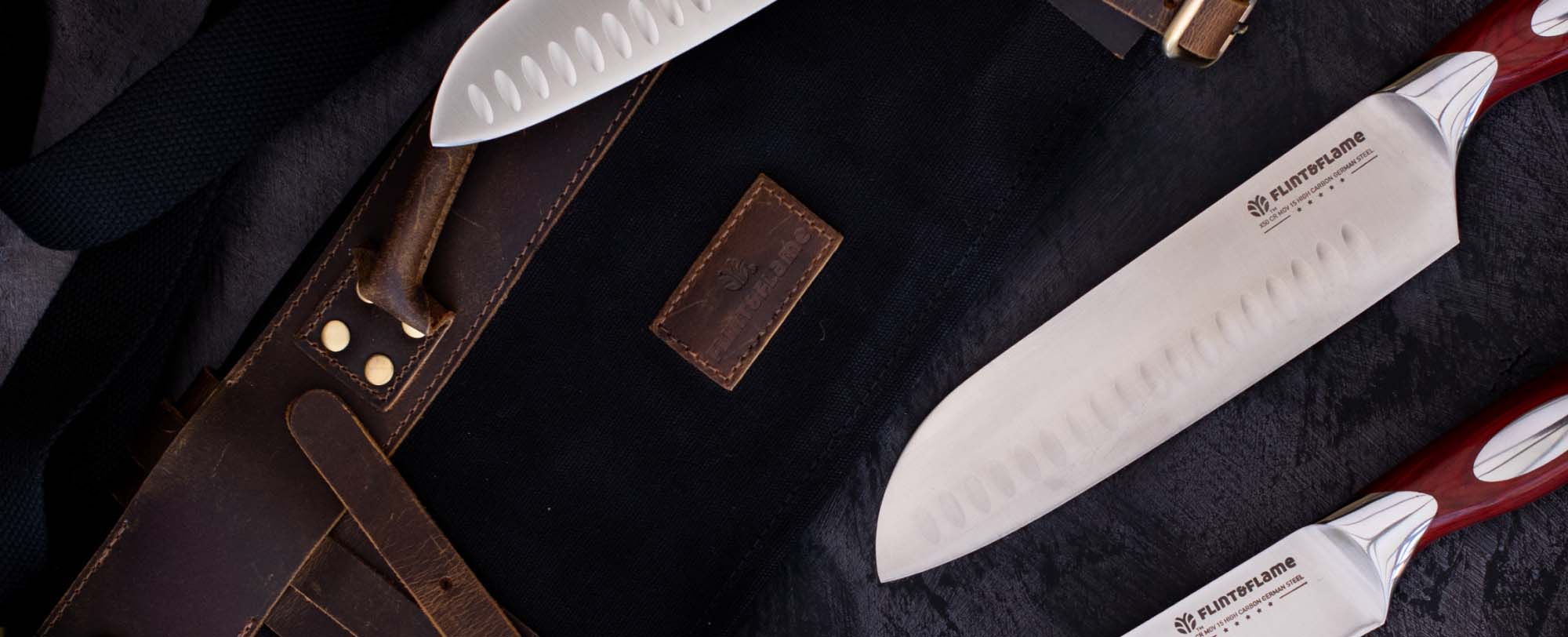
- Store it safely in a knife storage solution such as a block, magnetic strip or sheath.
- Use a wooden or bamboo board. See our cutting and cheese boards.
Explore more from our full knife range, including Santoku Knives, Paring Knives and Knife Sets & Blocks. Keep the edge in top condition with our sharpening tools and our free Kitchen Knife Sharpening Guide.
Chef’s Knives FAQs
What size chef’s knife should I buy?
An 8 inch (20cm) blade suits most people. Go smaller if you want more control, larger for big jobs.
What is the difference between a chef’s knife and a santoku?
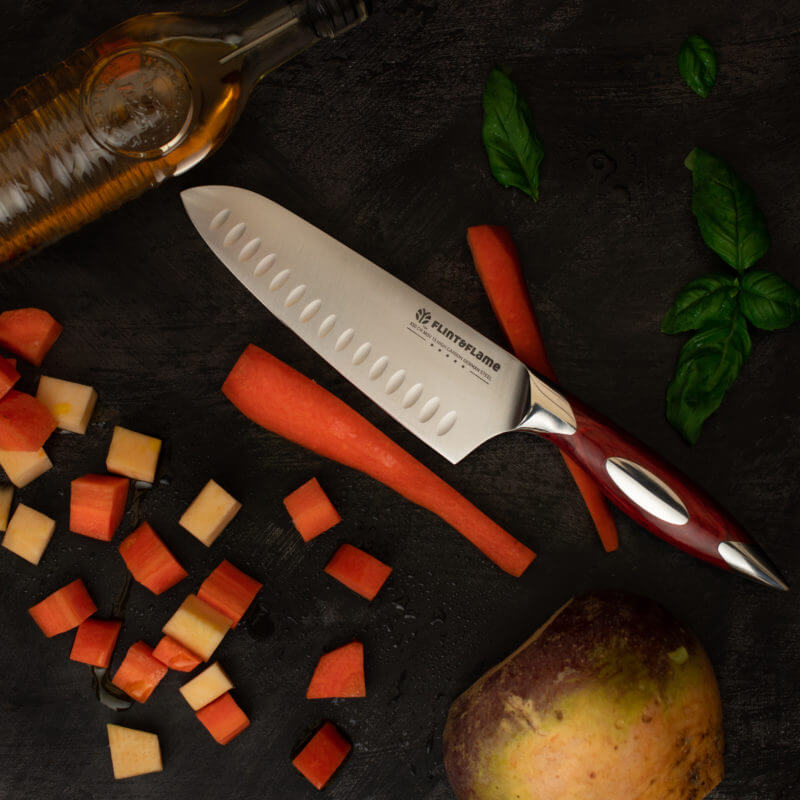
A chef’s knife is curved with a pointed tip for rocking. A santoku has a flatter edge and rounded tip, suited to straight up-and-down chopping and thin slicing. See our Santoku Knives.
Can I use a chef’s knife to cut bones?
No. Use a cleaver or a boning knife for bones, as a chef’s knife can chip.
How often should I sharpen it?
Hone it often and sharpen a few times a year depending on use. See our free sharpening guide.
View Our Chefs Knife Collections
-
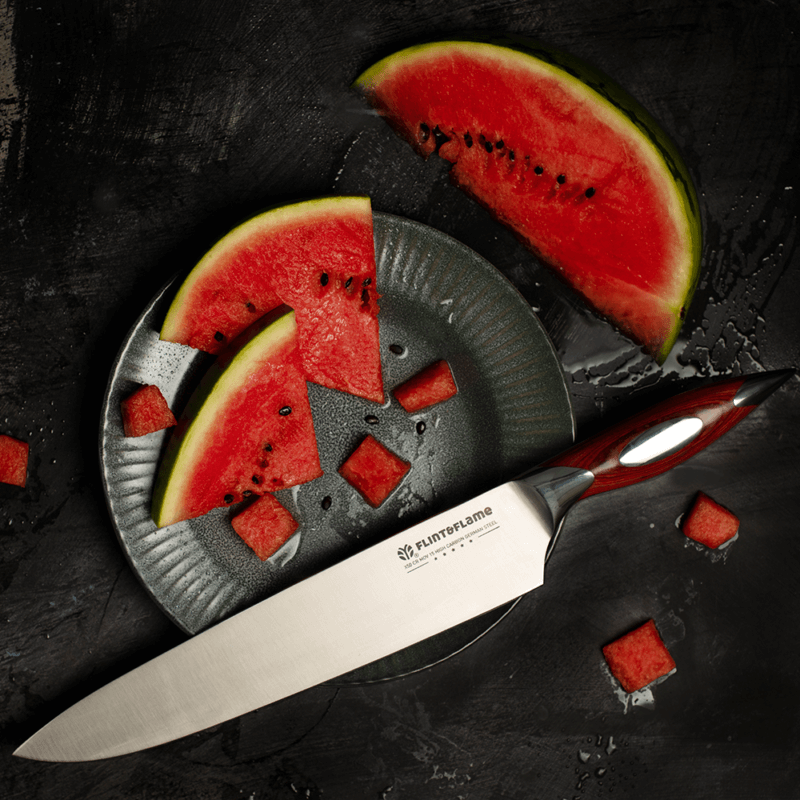
Flint & Flame 10″ Chef Knife
£175.00 -
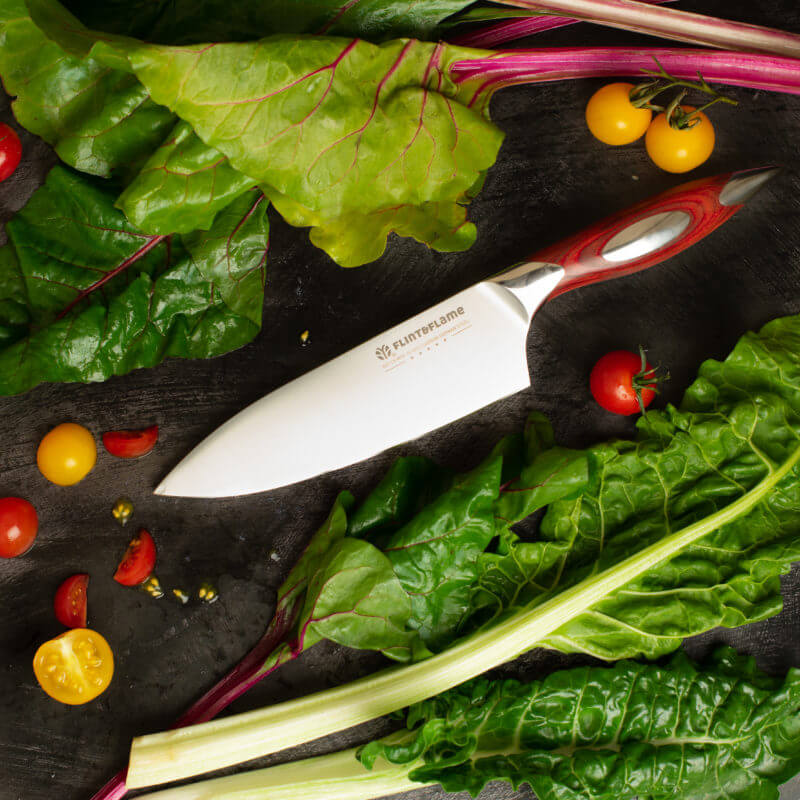
Flint & Flame 6″ Chef Knife
£130.00 -
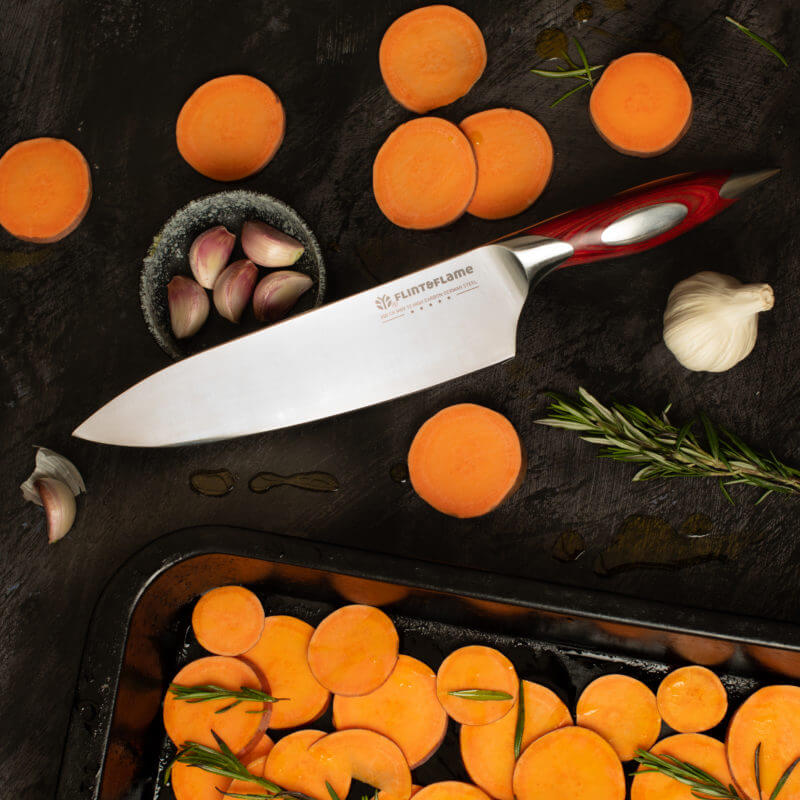
Flint & Flame 8″ Chef Knife
£155.00 -
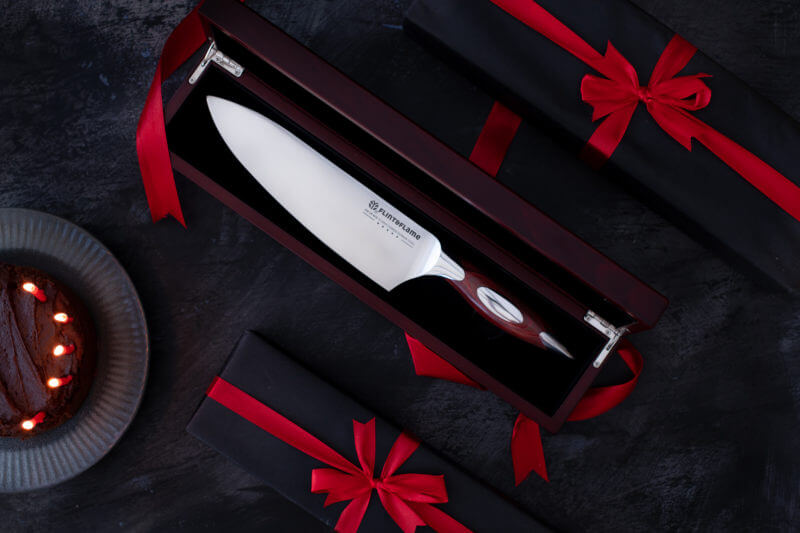
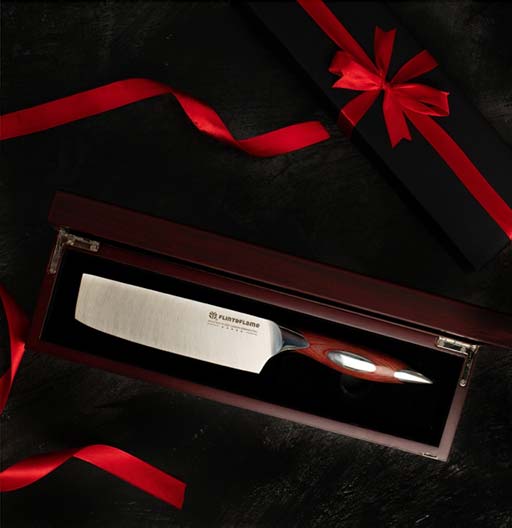
Flint & Flame 8″ Chef Knife with Wooden Box
£165.00 -
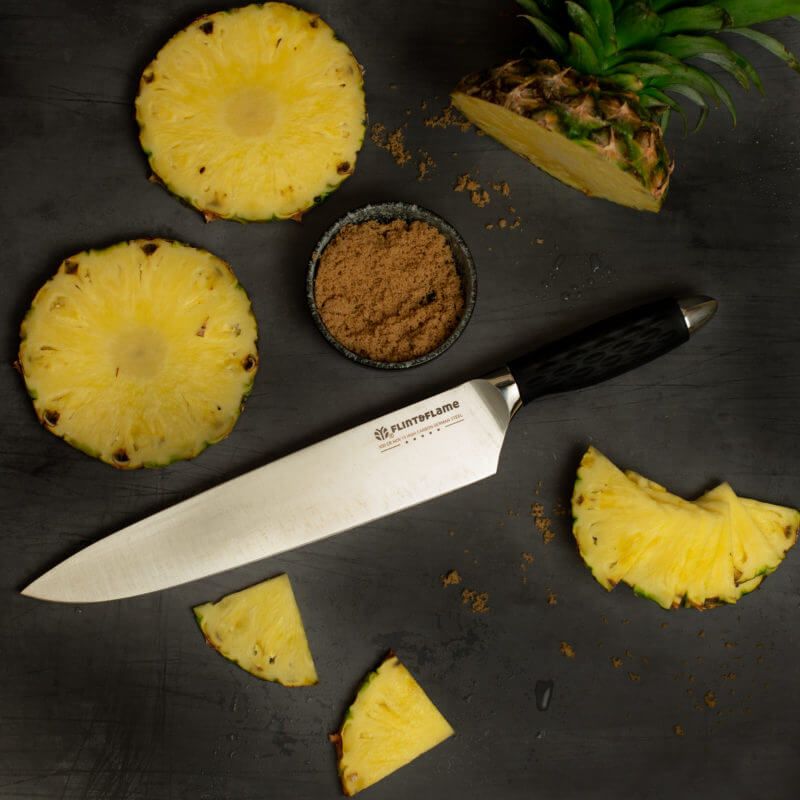
Pro Series 10″ Chef Knife
£175.00 -
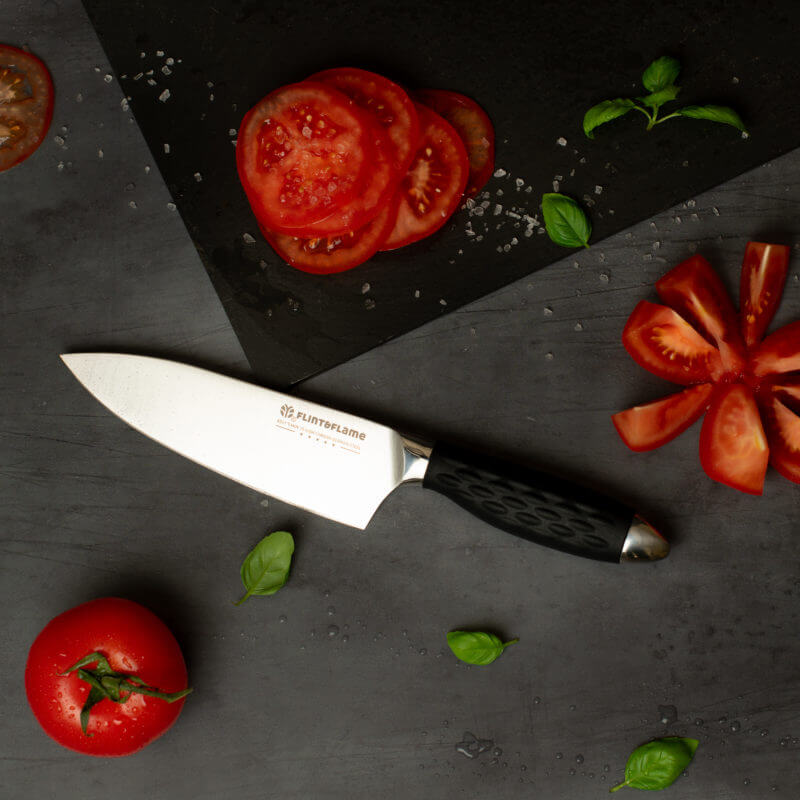
Pro Series 6″ Chef Knife
£125.00 -
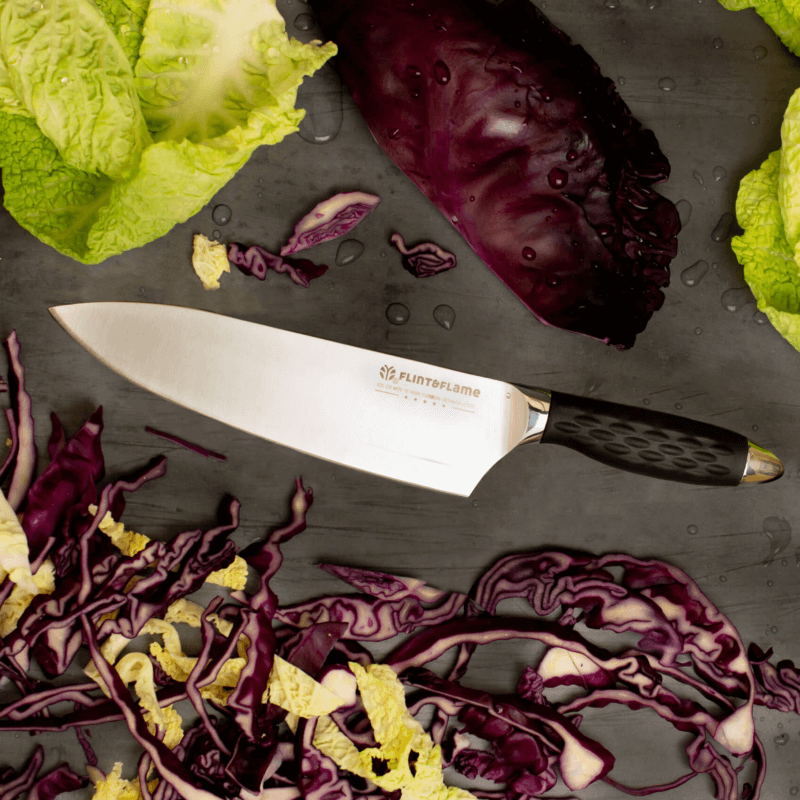
Pro Series 8″ Chef Knife
£155.00 -
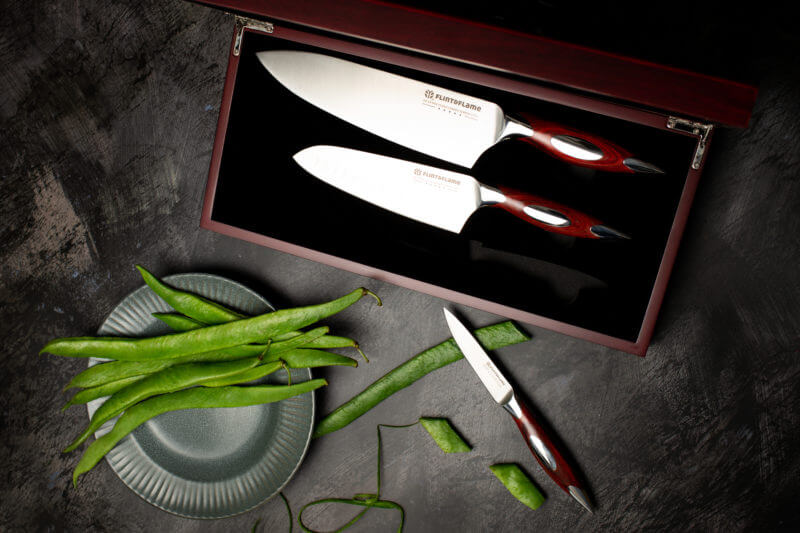
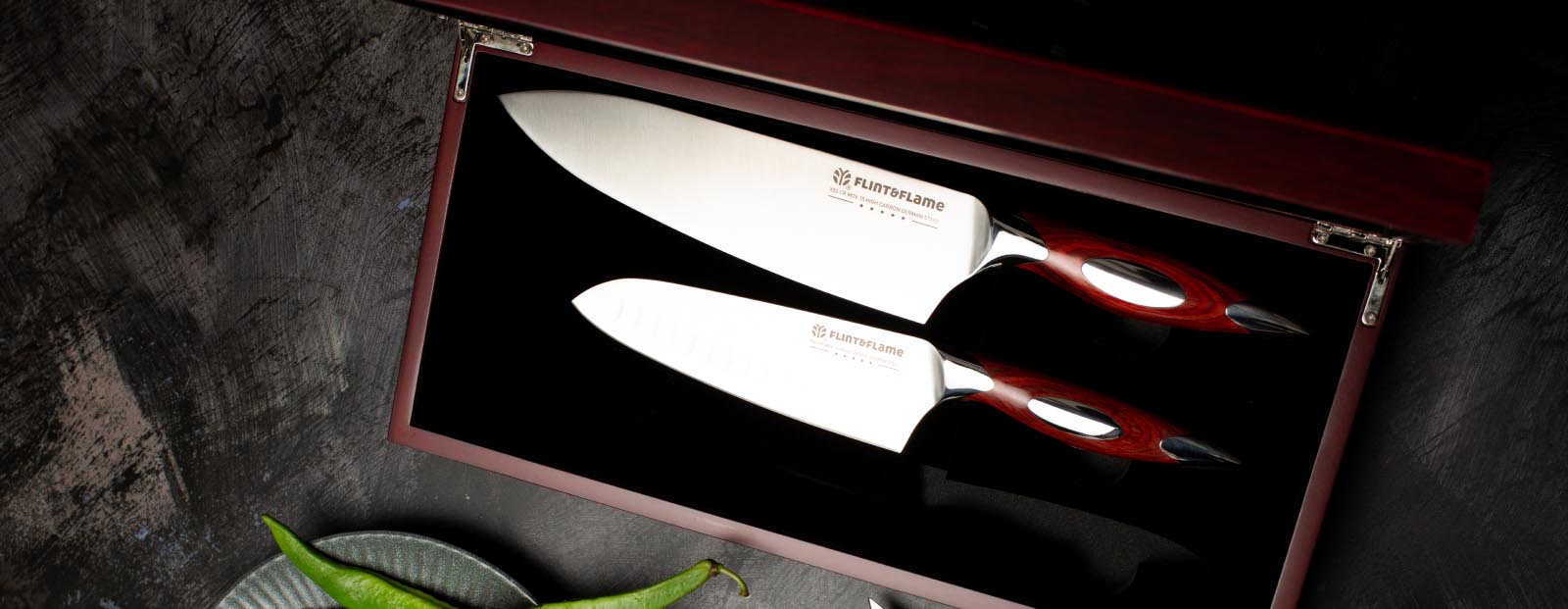
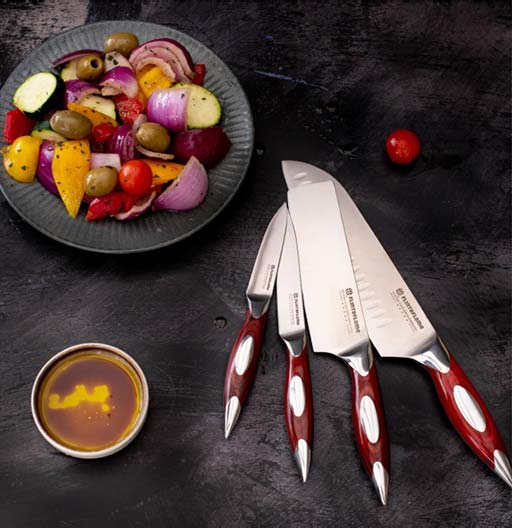
Flint & Flame 3 Piece Chef Set in Wooden Gift Box
£335.00