 0


 British Design, German Steel
 25 Year Guarantee
 Free Delivery over £150*

 Trustpilot

New to Flint & Flame?
25% OFF
your first order
Sign up to The Slice, our free newsletter, for exclusive offers, sharpening tips, chef recipes and more.
Unsubscribe any time. We never share your data.



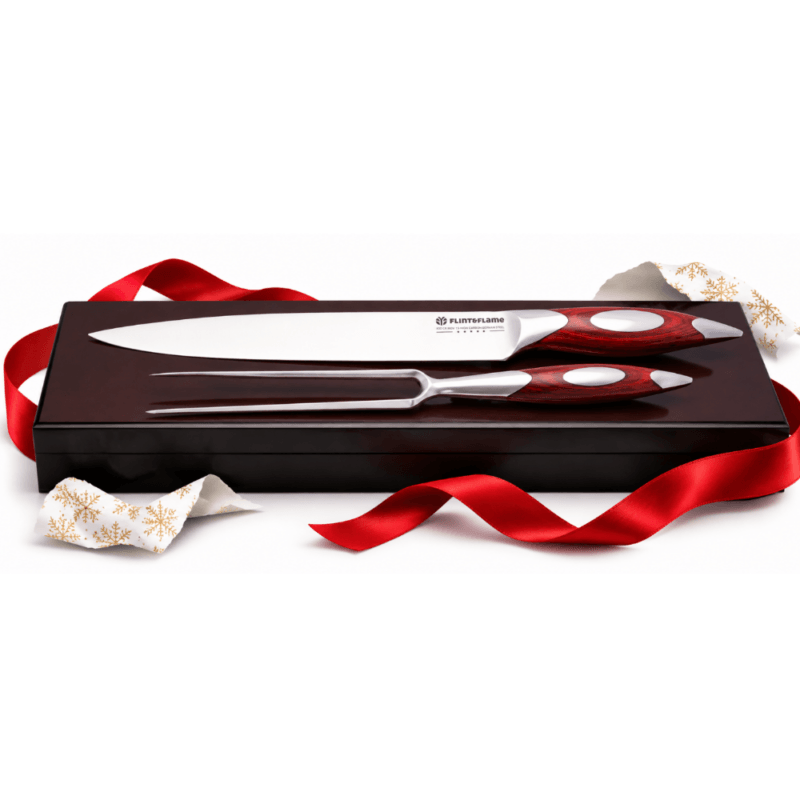
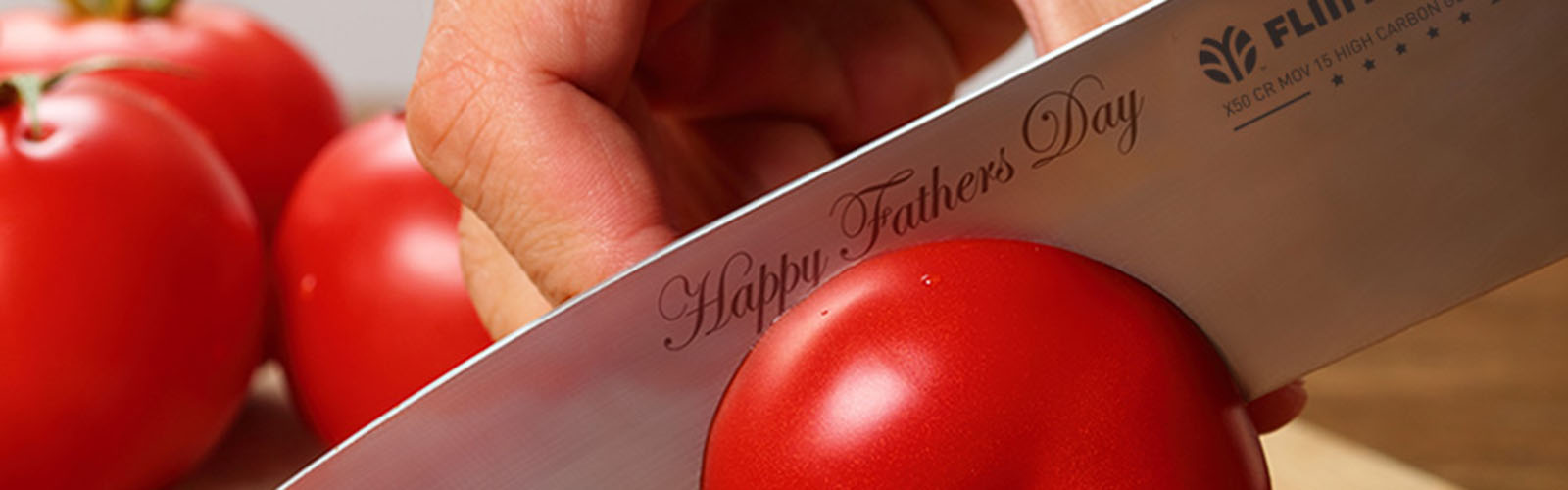
Don’t forget: buying a gift? Personalise each knife with engraving from just £5
Simply choose your gift below, click on the item and follow the engraving instructions on the next page.
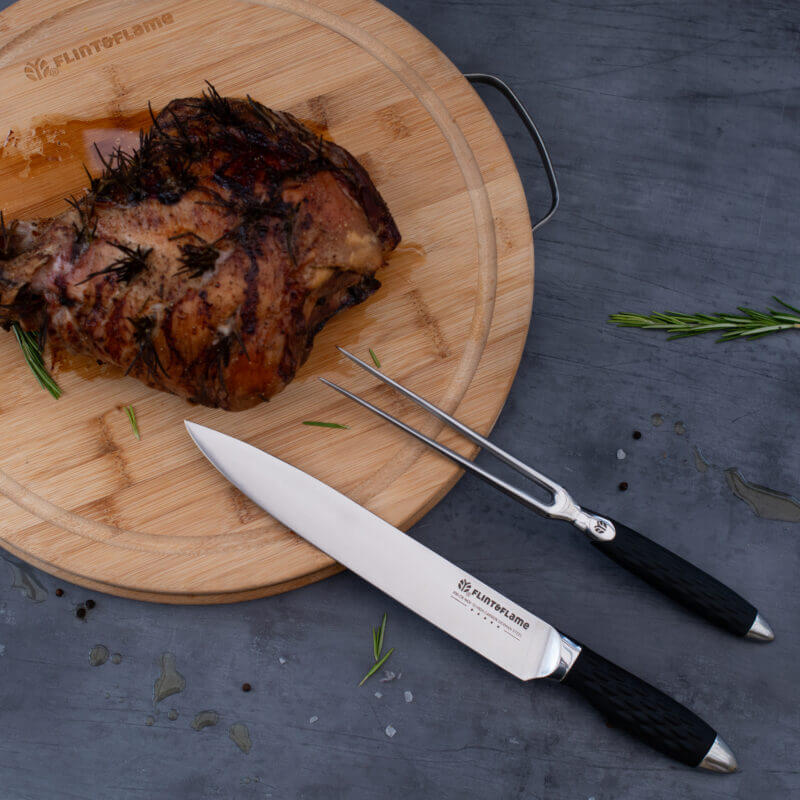
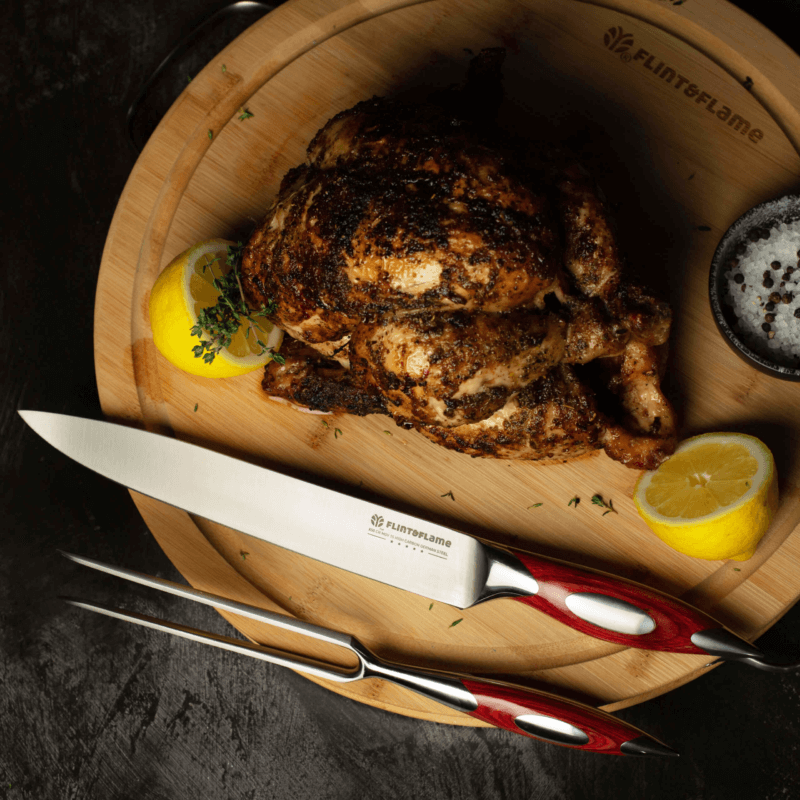
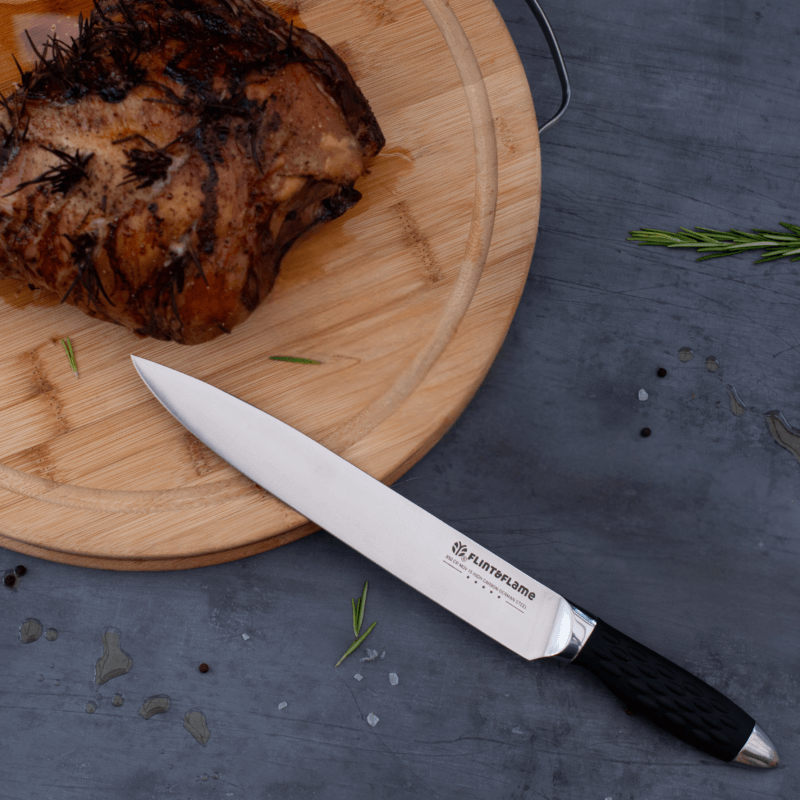
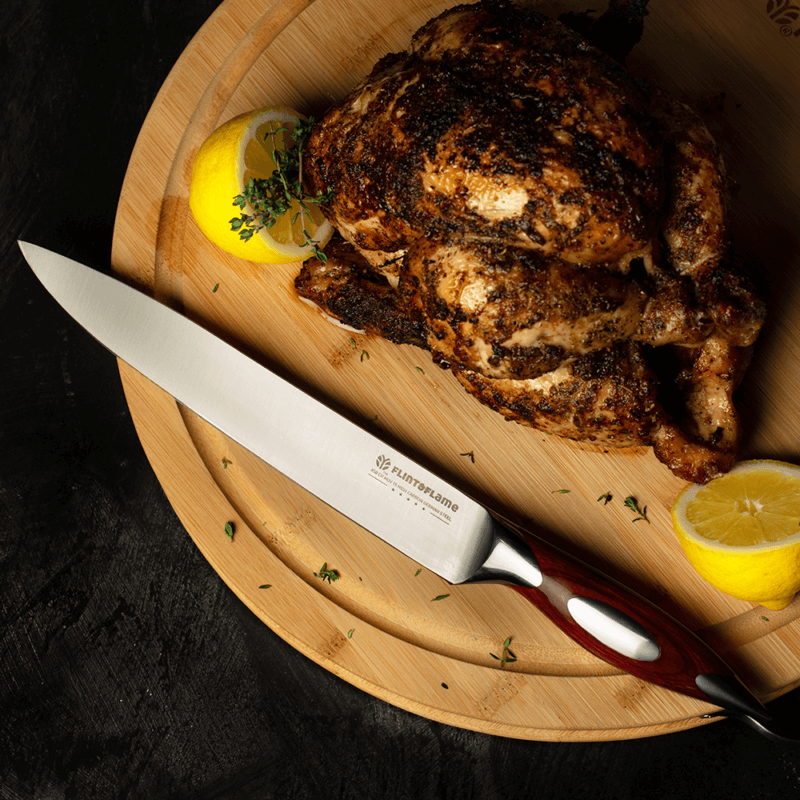
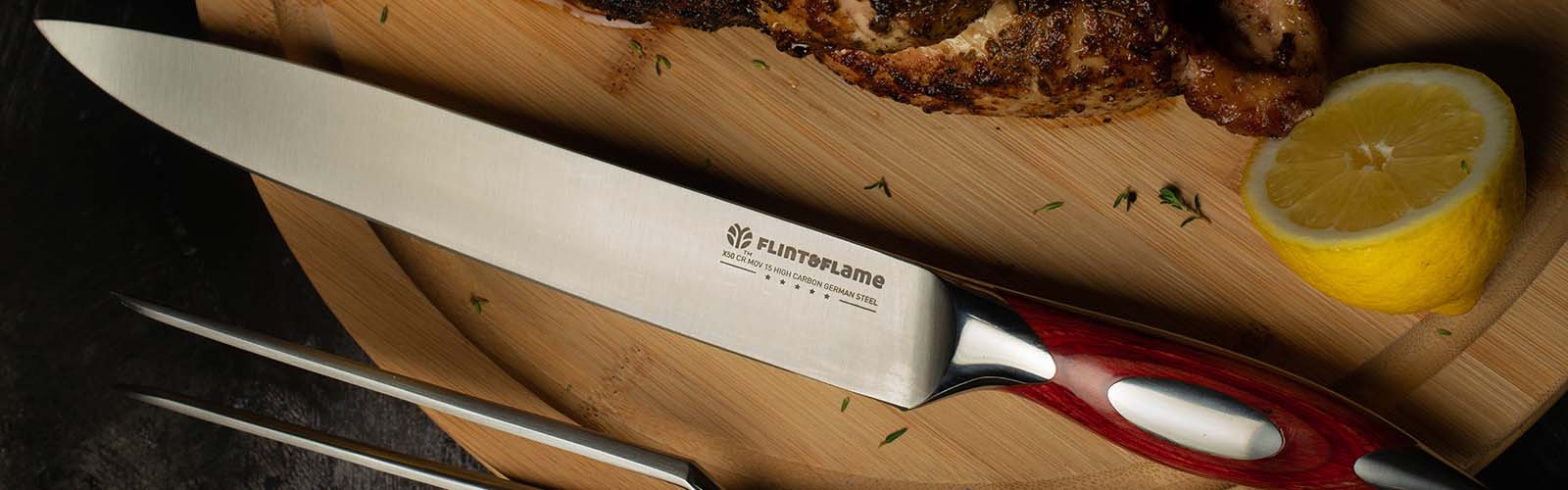
The Sunday roast and the Christmas turkey both end the same way: someone has to carve. A proper carving knife makes it easy, giving thin, even slices every time without shredding.
Our carving knives are a little longer than most, so you have less sawing and less scoring on your topside joint as you slice it. Their long, slim blades glide through cooked meat.
A carving knife has a long, narrow blade, typically 8-9 inches, with a sharp point. It is designed to slice cooked meat, poultry and joints in a single smooth stroke. The sharp point makes it ideal for both boned and boneless joints
Length. 8-9 inches suits most joints. Longer is better for large roasts.
Blade width. Narrow blades slice more cleanly and cause less drag.
Handle. A secure, comfortable grip helps when hands are greasy.
Balance. It dictates how the blade moves in your hand, directly impacting precision, control
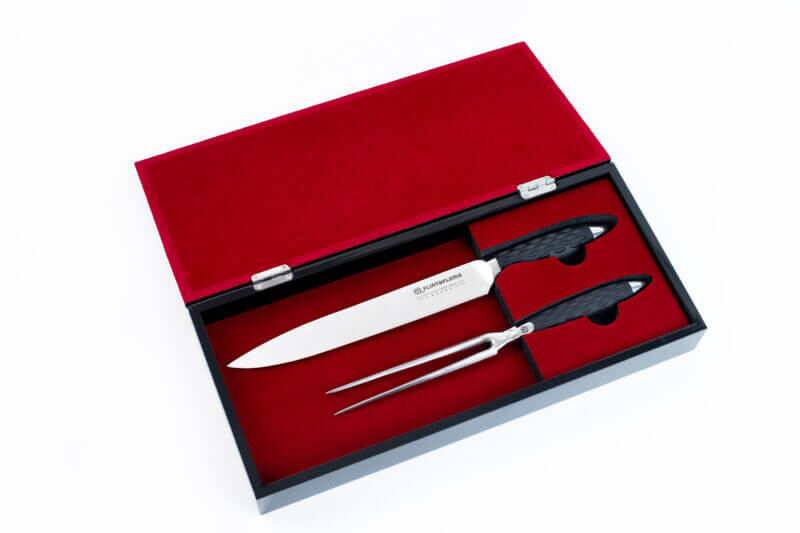
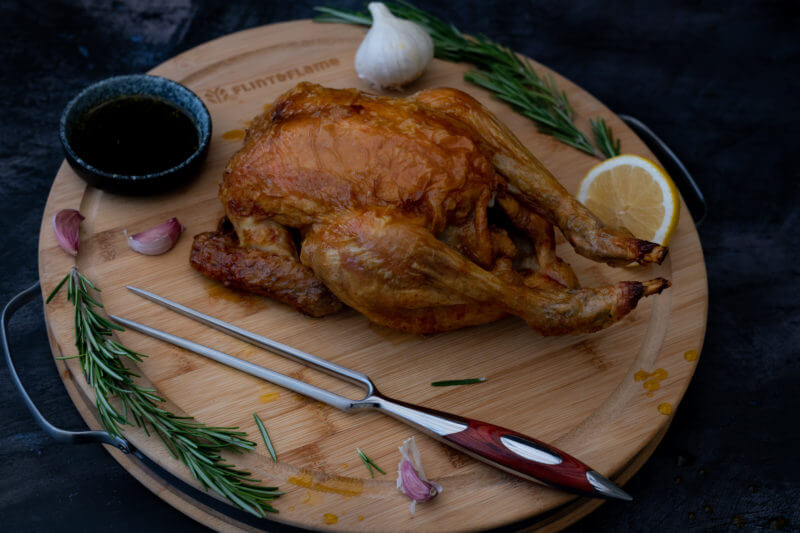
Consider a fork. A carving fork holds the joint steady.
Explore more from our full knife range, including Butcher’s Knives, Steak Knives and Bread Knives. Keep the edge in top condition with our sharpening tools and our free Kitchen Knife Sharpening Guide.
What length carving knife is best?
8-9 inches works for most roasts.
What is the difference between a carving knife and a bread knife?
A carving knife has a smooth edge to slice cooked meat. A bread knife is serrated for crusts, although it can be very good on crackling. See our Bread Knives.
Do I need a carving fork?
It is not essential, but it holds the joint steady and keeps your hand safe.
Can I carve with a chef’s knife?
You can, but a carving knife is thinner and gives neater slices, it also tends to be balanced a little differently.








+44 (0) 1403 740 230
Brookdale Farm, West Chiltington Lane, Billingshurst, West Sussex RH14 9EA
* Excludes Plancha Cooking System

New to Flint & Flame?
25% OFF
your first order
Sign up to The Slice, our free newsletter, for exclusive offers, sharpening tips, chef recipes and more.
Unsubscribe any time. We never share your data.