 0


 British Design, German Steel
 25 Year Guarantee
 Free Delivery over £150*

 Trustpilot


New to Flint & Flame?
25% OFF
your first order
Sign up to The Slice, our free newsletter, for exclusive offers, sharpening tips, chef recipes and more.
Unsubscribe any time. We never share your data.



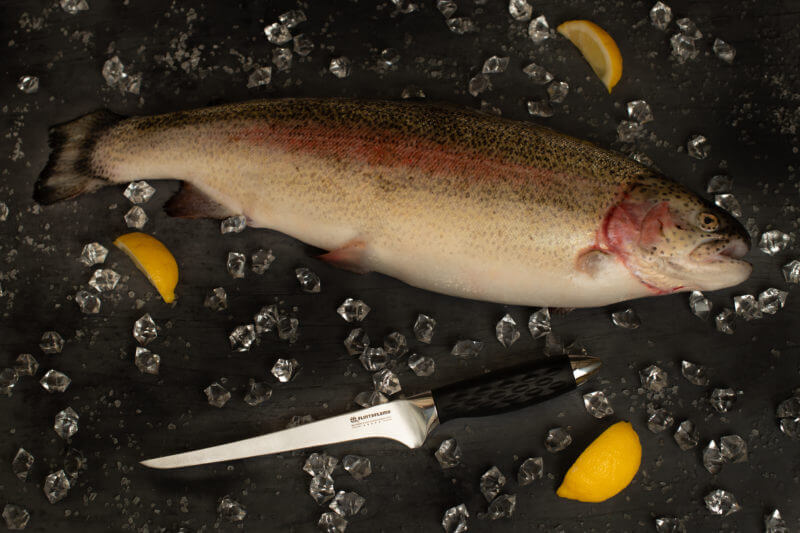
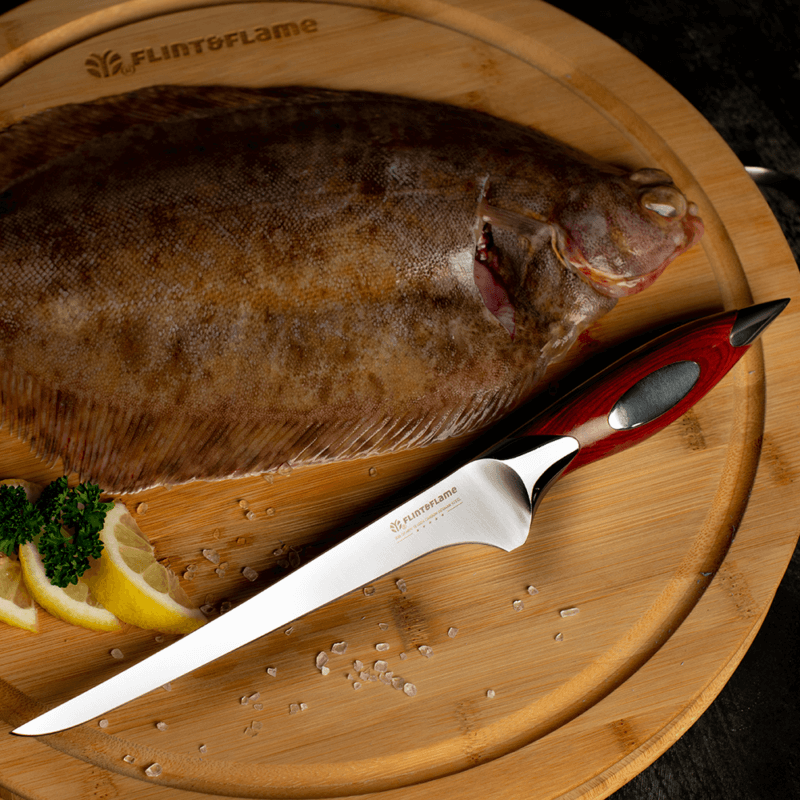
Filleting a fish or boning a chicken is much easier with a thin, flexible blade. A filleting knife follows the bones and removes meat cleanly.
It is the right tool for anyone who buys whole fish or likes to prepare poultry themselves.
A filleting knife has a long, narrow blade that flexes slightly. It is usually 15–20cm long and very sharp, so it can glide along bones with little waste.
Flexibility. More flex for fish, less for meat.
Length. 15–18cm for small fish, 20cm for larger fish.
Handle. Non-slip, as fish can be slippery.
Sharpness. Needs to be very sharp for the best results.
Explore more from our full knife range, including Butcher’s Knives, Paring Knives and Japanese Knives. Keep the edge in top condition with our sharpening tools and our free Kitchen Knife Sharpening Guide.
What is a filleting knife used for?
Filleting fish, and boning or skinning meat and poultry.
What length is best?
15–20cm, depending on the size of fish.
Is a filleting knife the same as a boning knife?
They are similar. Boning knives are stiffer, while filleting knives are more flexible.
Does it need to be very sharp?
Yes. A sharp edge gives clean cuts and is safer.









+44 (0) 1403 740 230
Brookdale Farm, West Chiltington Lane, Billingshurst, West Sussex RH14 9EA
* Excludes Plancha Cooking System

New to Flint & Flame?
25% OFF
your first order
Sign up to The Slice, our free newsletter, for exclusive offers, sharpening tips, chef recipes and more.
Unsubscribe any time. We never share your data.